

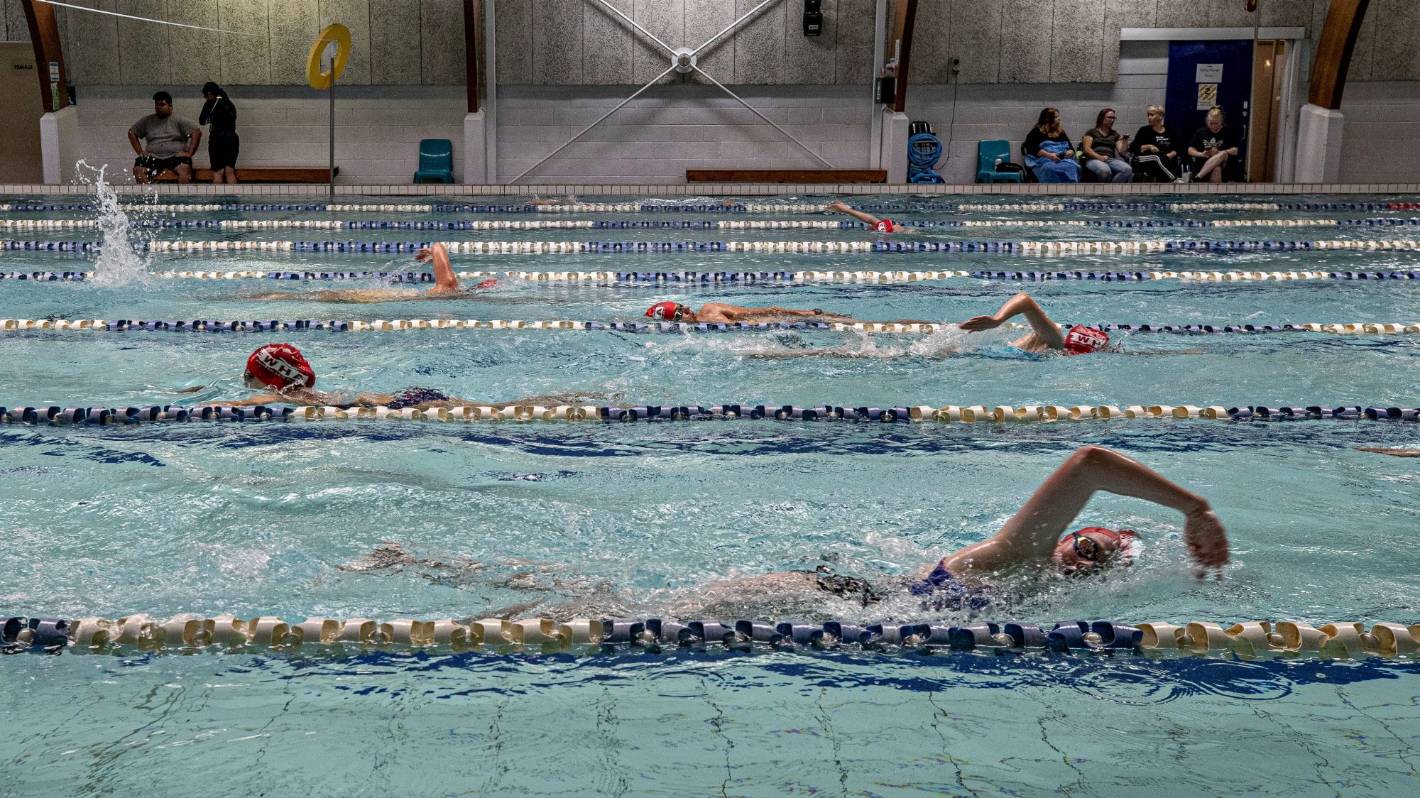
After the highest number of drownings for almost 40 years this summer, two Christchurch city councillors are calling for free access to swimming pools and lessons for children.
Jake McLellan and Melanie Coker want children across the city to develop basic water safety skills, even if their families can not afford to pay for it.
“Drowning rates in this country are clearly distressing and unacceptable, especially this summer,” McLellan said.
“While there’s a range of reasons behind each tragedy, a lack of training and water skills comes up too often.”
READ MORE:
* Water safety education push likely for Manawatū River following four drownings
* Financial burden of swimming lessons is ‘massive’ but crucial for New Zealanders after horror summer of drownings
* Family mourn 5-year-old girl who died in suspected drowning
McLellan and Coker said they want the council to put together a package that can do more to address those issues.
“We need to make sure each child has the chance to develop basic water safety skills, without financial barriers getting in the way,” Coker said.
Between 4pm on Christmas Eve and January 5, 14 people drowned across New Zealand, the worst figure since 1982-83.
In 2021 74 people drowned, the same as the previous year, with 20 of them being in December alone.
In Canterbury, six people died in preventable drowning incidents in 2021, up from two in 2020, according to Water Safety New Zealand’s provisional drowning report.
Two drowned at beaches, two in rivers, one in a public pool and one in an inland still waterway.
A five-year-old girl died in a suspected drowning at the council-owned outdoor Waltham Pool on December 22. Later the same day, an 18-year-old man died after jumping into Waimakariri River in Canterbury and failing to surface.
McLellan and Coker said they wanted council staff to investigate options to increase swimming ability, including free lessons for either children under 12 or for those up to 16.
They also wanted staff to report back on the viability of free off-peak entry to pools for children under five, 12 or 16, including in school holidays, and for free entry to adults swimming with children, either during off-peak periods or at all times.
They hope their fellow councillors will support their request when it is discussed at a council meeting on Thursday.
“The goal here is to ensure everyone growing up in this city has the opportunity to become confident in the water,” McLellan said.
He said other cities including Auckland provided free swimming pool admission to children 16 and under.
The cost of various options would be looked at as part of the staff investigation.
When asked if they had considered the impact of free lessons on private swim schools, McLellan said there would still be a market for them in advanced swimming.
Making a comparison, he said bookshops successfully operated despite people having free access through libraries.
Between 5000 and 6000 children take part in the council’s learn to swim programme each term and in 2021, 14,787 students from 67 schools completed the council’s waters skills for life programme.
Council head of recreation, sports and events Nigel Cox said the authority did not fund free swimming lessons, but 26 low decile schools received a subsidy last year, which benefited 4137 children.
The subsidy was awarded via a $134,250 fund supported by Sport Canterbury, Water Safety NZ and the Rata Foundation.
The council also secured funding from Sport Canterbury’s Tū Manawa Active Aotearoa fund to pay for 145 people aged 5 to 24 to receive free lessons.
Cox said he did not know how many more children would take advantage of swimming lessons if they were free.
The council employs about 120 swimming instructors.
© 2022 Stuff Limited