

Topics
Jobs in India | Employment in India | Indian Army
Mihir Sharma | Bloomberg Last Updated at July 1, 2022 11:07 IST
https://mybs.in/2awxLCO
India’s attempt to reform military recruitment, which has set off political convulsions that show no signs of abating once again shows that its aspirations to superpower status are no match for a below par economy.
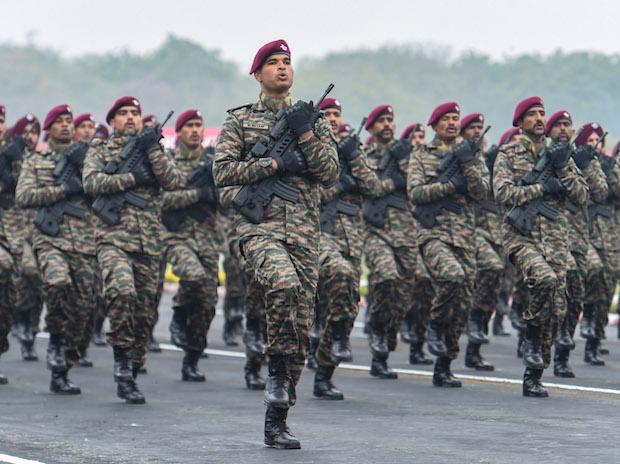
India’s military particularly its army is antiquated in organization and manpower heavy. After some ill advised, populist and expensive tinkering with pensions early in its tenure, the government found it was spending all its military budget on personnel, leaving very little for modernization or for hardware.
Meanwhile, for more than two decades, its own strategists have been calling for a leaner and younger army. The average Indian soldier is 32 or 33, making its army one of the oldest in the world.
And so, after two years in which the army suspended its typical annual enlistment of 60,000 young men on 20-year contracts, the government announced it was shifting to a tour-of-duty type system in which new recruits will be taken on for four years and then sent off with a handsome and tax-free discharge bonus of $15,000.
This has set off a firestorm of protest. Literally, in some cases, as angry would be army recruits set trains a very visible symbol of the central government even the most remote parts of India alight.
The problem is that, for many young men in the most economically disadvantaged parts of India, the army is their only hope of a career or, for that matter, of getting married, given that years of sex selective abortions have caused the gender ratio in those parts of India to skew heavily male. These men or boys, since they’re mostly teenagers have spent years running and practicing drills in hopes of getting selected.
Before the new recruitment system was announced, a typical applicant told a reporter for the Print: “If I don’t get a job in the army, my chances of living with dignity in my society are very low. My chances of marrying go down. People will mock me at every function.” Those who do return to their villages after their 20 years of service, on the other hand, tend to be respected and wind up in positions of local leadership.
It’s telling that the protests, and the anger, have largely been limited to the poorest parts of India, where other employment opportunities are scarce. The government has tried to emphasize the $15,000 payout the four-year men will receive and claimed that army training will make them more attractive on the job market. That argument holds less sway in areas where there’s little prospect of finding a good job today or four years from now.
The government has done itself no favors by obscuring its real motivations.
Everyone knows this is about reducing the amount the military spends on salaries and creating an army that is younger and more agile technologically. At the same time, the government won't reveal its plans for military transformation. Forget about detailing how much money the program would save, we don’t even know for certain how many people are currently employed by India’s military. For some reason, that’s treated as a state secret. (It’s estimated to be around 1.4 million, about half as many again as in China.)
Indian Prime Minister Narendra Modi is generally credited with having an instinctive understanding of what voters want. Yet it’s astounding how often his government designs policies in secret that then elicit a furious public reaction. While military reform was inevitable and overdue, surely it could have been discussed in public so that at least the current generation of aspirants would have known better than to run kilometers a day to get themselves in shape.
As with farmer led protests last year, there’s a chance the government will be forced to retreat in the face of this unwavering hostility in areas that remain politically powerful, if economically weak.
A reversal would carry its own costs, however. In an aspiring superpower the military should be an instrument designed to project power, ensure domestic security and respond to emerging threats. What India is learning is that, given its failure to create jobs, its army must also remain something of an employment generation scheme. If the country wants to play a bigger role in its region and in the world, it will first need to fix its economy.
Business Standard has always strived hard to provide up-to-date information and commentary on developments that are of interest to you and have wider political and economic implications for the country and the world. Your encouragement and constant feedback on how to improve our offering have only made our resolve and commitment to these ideals stronger. Even during these difficult times arising out of Covid-19, we continue to remain committed to keeping you informed and updated with credible news, authoritative views and incisive commentary on topical issues of relevance.
We, however, have a request.
As we battle the economic impact of the pandemic, we need your support even more, so that we can continue to offer you more quality content. Our subscription model has seen an encouraging response from many of you, who have subscribed to our online content. More subscription to our online content can only help us achieve the goals of offering you even better and more relevant content. We believe in free, fair and credible journalism. Your support through more subscriptions can help us practise the journalism to which we are committed.
Support quality journalism and subscribe to Business Standard.
Digital Editor
PREVIOUS STORY
NEXT STORY
Copyrights © 2022 Business Standard Private Ltd. All rights reserved.
Upgrade To Premium Services
Business Standard is happy to inform you of the launch of “Business Standard Premium Services”
As a premium subscriber you get an across device unfettered access to a range of services which include:
Premium Services
In Partnership with 
Dear Guest,
Welcome to the premium services of Business Standard brought to you courtesy FIS.
Kindly visit the Manage my subscription page to discover the benefits of this programme.
Enjoy Reading!
Team Business Standard